Loading...
Serving Carmichael, CA and surrounding areas. (916) 302-8845
Carmichael Masonry & Concrete serves homeowners throughout Antelope, CA with foundation block wall installation, retaining wall construction, concrete repair, and brick masonry. We know Sacramento County's permit process, and we understand how the clay soils and hot Sacramento Valley summers affect masonry on the 1980s and 1990s tract homes that make up most of Antelope's housing stock. We respond to all new inquiries within 1 business day.
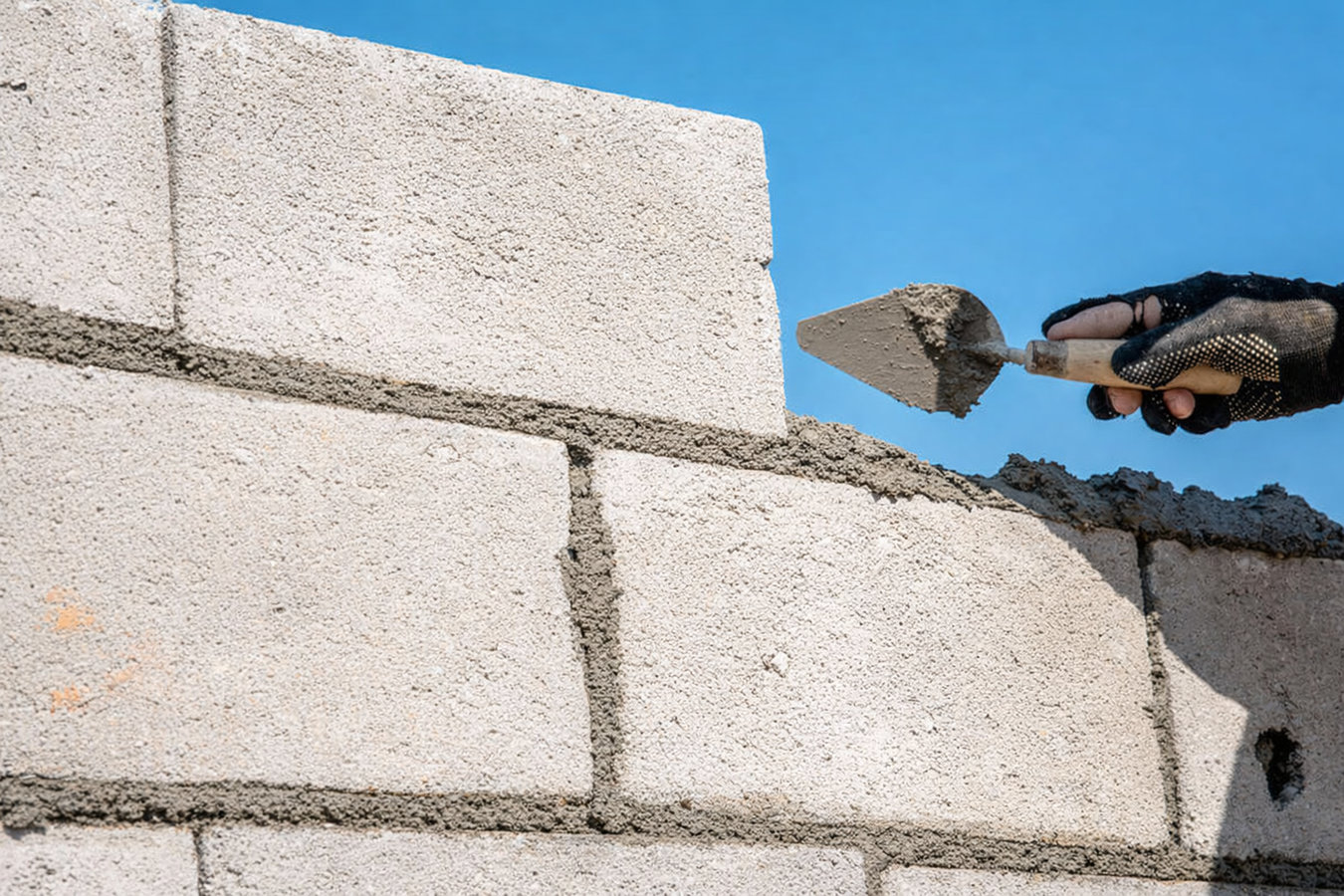
Antelope homeowners adding room additions, detached garages, and accessory dwelling units on their suburban lots regularly need new foundation block walls as part of those projects. Because Antelope is governed by Sacramento County rather than a city, permits go through the county's Department of Community Development - and we handle that process from application to final inspection. Learn more about our foundation block wall installation services.
Some Antelope properties have grade changes where the yard drops away from the house or along a fence line, and the clay-heavy soil here makes wall construction more demanding than on flat, sandy ground. A retaining wall built without drainage behind it on clay soil will face enormous pressure every wet season - we build drainage in from the start so walls hold their position for decades rather than a few years.
Many Antelope homes built in the 1980s and 1990s have brick accents on chimneys, mailbox surrounds, planters, and front entry features. At 25 to 40 years old, the mortar on these features is commonly crumbling or recessed, and the hot Sacramento Valley summers accelerate the breakdown. Small repointing jobs caught before bricks start to shift cost a fraction of what full brick replacement runs.
Nearly every home in Antelope has a concrete driveway, and driveways from the 1980s and 1990s are now 25 to 40 years old. The combination of clay soil expansion and extreme summer heat means cracks and settled sections are common throughout the community. Paver installations handle soil movement better than a solid concrete slab and allow individual sections to be addressed without tearing out the whole surface.
Block walls line property boundaries and backyard fences across Antelope and are one of the most common masonry features in the area. Walls built in the 1980s and 1990s are reaching the age where cracked or missing mortar joints are common, and footings that were undersized for clay soil are starting to show movement. Catching leaning or cracking walls before they fail outright is much less expensive than a full demolition and rebuild.
Antelope homes from the 1980s and 1990s are built on expansive clay soils that have been expanding and contracting for 25 to 40 wet winters and dry summers. That repeated movement is the primary cause of foundation cracks in this area - and stucco cracks near windows and doors are often the first visible sign that the structure beneath has shifted. Early assessment prevents small cracks from becoming water intrusion problems.
Antelope grew quickly during the 1980s and 1990s as Sacramento's suburbs expanded northeast, and most of the housing stock reflects that era. Two-story tract homes on 5,000-to-7,500-square-foot lots, stucco exteriors, concrete driveways, and attached two-car garages are the norm across the community. At 25 to 40 years old, this housing stock is well into the age range where masonry features need serious attention. Concrete driveways and garage aprons are cracking. Brick accents on chimneys and entry features have mortar that has been breaking down for decades. Block walls along property lines are starting to lean. None of this is unusual - it is simply what happens when masonry reaches this age in a Sacramento Valley climate - but it needs a contractor who understands what the materials have been through.
The ground under Antelope adds to the challenge. Expansive clay soils throughout the Sacramento Valley swell when the winter rains arrive and shrink back during the long dry summers. That cycle of expansion and contraction puts stress on every concrete and masonry surface on a property - driveways, patios, block walls, and foundations all feel it. Antelope summers regularly exceed 100 degrees Fahrenheit, which accelerates the breakdown of mortar, caulk, and stucco coatings. And unlike cities with their own building departments, Antelope homeowners navigate Sacramento County's permit process for any structural masonry work, which adds a step that some contractors are not familiar with. Working with someone who knows the county process from the start saves time and avoids problems at inspection.
Our crew works throughout Antelope regularly, and we understand the local conditions that affect masonry work here. Because Antelope is an unincorporated community in Sacramento County, all structural masonry permits go through the Sacramento County Department of Community Development rather than a city hall. We handle the application, the required inspections at each stage, and the final sign-off - so you do not have to figure out county processes on your own.
Most of the homes we work on in Antelope are located off Antelope Road and Watt Avenue - the two main corridors that most residents use as reference points for where things are in the community. The subdivisions throughout the area share similar construction patterns, so when we arrive at a job in Antelope, the housing stock rarely surprises us. Antelope High School is a landmark that most residents recognize as a central reference point, and we have worked on homes in neighborhoods throughout the area surrounding it.
We also serve the neighboring community of Citrus Heights, which shares Antelope's Sacramento County permit process and similar housing conditions. If your masonry project spans both sides of that border, or if you are looking for references from nearby jobs, we work that whole corridor regularly.
Reach us by phone or through the online estimate form. We ask a few questions about the project and schedule a time to come see your property. We respond to all new inquiries within 1 business day.
We visit your Antelope property, assess site conditions including soil and drainage, take measurements, and provide a written itemized estimate within a few days. No phone quotes for structural masonry - the site visit is the only way to give you an accurate number that will not change after work starts.
Once you approve the estimate, we submit the permit application to Sacramento County on your behalf. County review typically takes two to six weeks. We track the status and keep you updated so you always know where the project stands before work begins.
The crew completes the work and we schedule required county inspections at each stage. We are on-site for every inspection. Any corrections are our responsibility to address - not yours. Final walkthrough confirms the work is complete before we close out the project.
We serve all of Antelope and handle Sacramento County permits from start to finish. Call us or fill out the form and we will respond within 1 business day to get your estimate on the calendar.
(916) 302-8845Antelope is an unincorporated community in Sacramento County with a population of around 130,000 people, making it one of the larger suburban communities in the greater Sacramento area. It sits in the northeastern part of the county, bordered by Roseville to the north and Citrus Heights to the south. Most residents commute to Sacramento or nearby employment centers, and the community has a strong owner-occupancy rate - most homeowners here have real equity in their properties and a direct stake in keeping them in good shape. The main commercial corridors run along Antelope Road and Watt Avenue, where most of the grocery stores, home improvement stores, and everyday services are located. Antelope Crossing is the main retail center, and Antelope High School is the community landmark most long-time residents recognize.
Because Antelope is not incorporated as a city, homeowners here work through Sacramento County for any permits or code enforcement rather than a city building department - a distinction that matters when planning any renovation or structural project. The housing stock is predominantly two-story tract homes with stucco exteriors, attached garages, and concrete flatwork, built mostly in the 1980s and 1990s. That era of construction is now reaching the age where masonry repairs are a regular part of homeownership. Neighboring Citrus Heights to the south shares similar housing patterns and is also a regular part of our service area.
Restore structural stability and stop foundation damage before it spreads.
Learn MoreBuild strong retaining walls that control erosion and define your landscape.
Learn MoreConstruct solid concrete block walls built for strength and longevity.
Learn MoreInstall a reliable foundation block wall that supports your structure.
Learn MoreDesign and build walkways that are safe, attractive, and built to last.
Learn MoreFrom foundation block walls and retaining walls to brick repair and concrete flatwork, we bring the same standards to every job in Antelope. Call today or submit an online estimate request.